
A well-organized jobsite improves productivity, reduces tool damage, and lowers injury risk. In my experience and through discussions with site managers and safety advisors, many inefficiencies come from poor layout planning rather than equipment limitations.
Power access should be planned early. Extension leads must be rated for outdoor and industrial use, routed away from walkways, and protected from sharp edges and vehicle traffic. Temporary power boards should remain dry and elevated when possible. Stable power distribution prevents nuisance shutdowns and electrical hazards.
Lighting directly affects accuracy and fatigue. Shadow-free lighting improves measurement accuracy and reduces trip hazards during early morning or enclosed work. Portable LED work lights provide energy efficiency and lower heat generation compared to traditional halogen lamps.
Tool staging reduces wasted movement and damage. Frequently used tools should be positioned within easy reach while heavy equipment remains stored securely when not in use. Charging stations benefit from ventilation and clear labeling to prevent battery mix-ups and overheating.
Dust and debris management improves both safety and finish quality. Vacuum extraction systems reduce airborne particles during cutting and grinding, while regular sweeping prevents slips and tool contamination. Waste bins should be clearly marked for recycling and disposal.
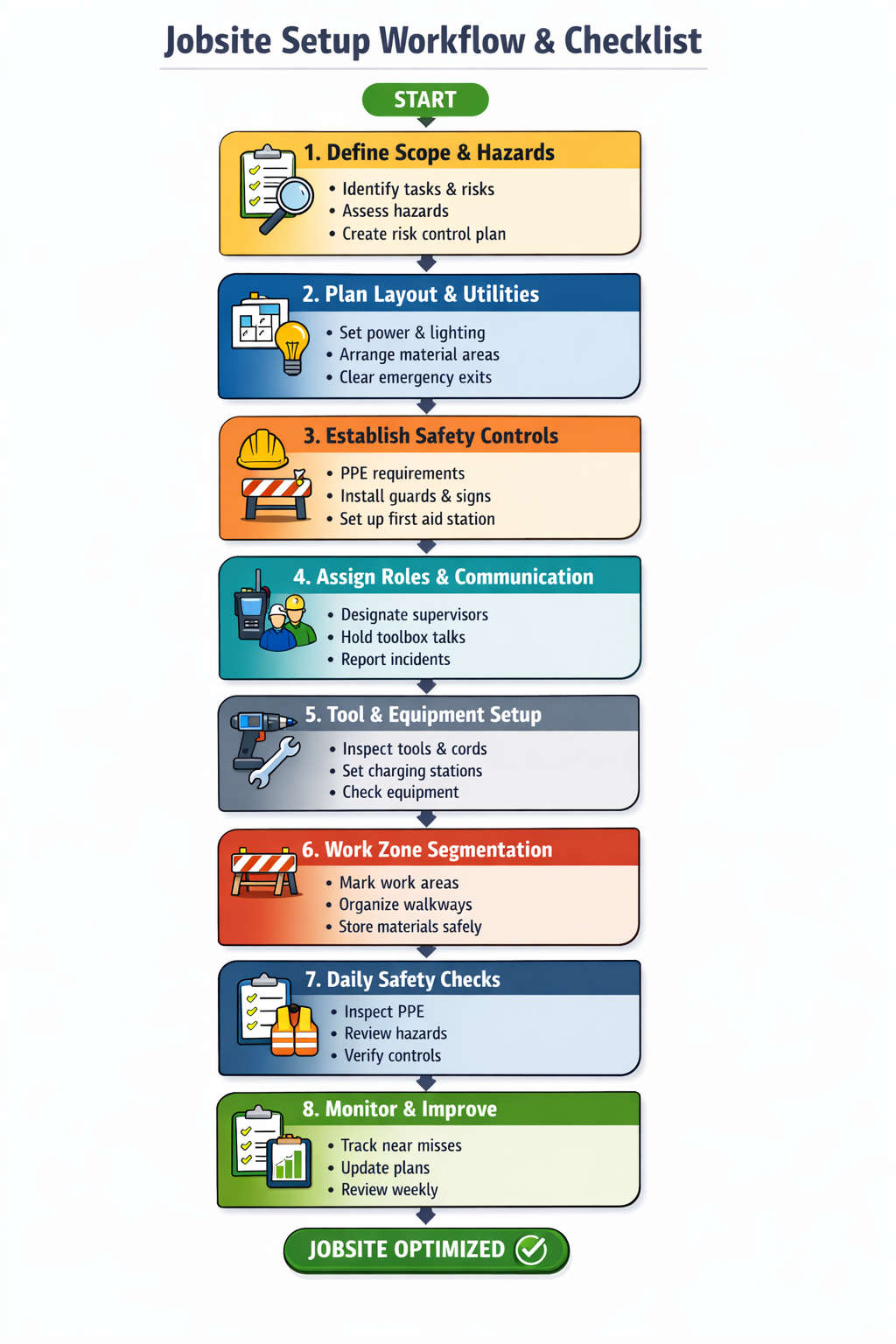
Workflow planning improves overall efficiency. Separating cutting, assembly, and finishing zones minimizes congestion and improves material flow. Clear walkways allow safe movement of people and equipment. Small layout improvements often deliver measurable productivity gains without additional investment.
A disciplined jobsite layout protects equipment, improves working conditions, and supports consistent project delivery.
As per the experience, understanding from today’s experts and in line with official OSHA safety and health program management guidance, setting up a jobsite with structured hazard identification, proactive planning, and clear communication significantly improves safety outcomes and reduces unplanned downtime. As emphasised by the UK Health and Safety Executive’s Health and Safety in Construction guidance, planning and organising a construction site around hazard control, monitoring, and clear roles for workers and supervisors is key to safe and efficient operations.
Sources & Further Reading
- OSHA – Safety and Health Program Management Guidelines: Official U.S. guidance on establishing and managing effective safety programs that include jobsite planning, hazard identification, coordination, and worker participation.
- HSE – Health and Safety in Construction: Authoritative UK Health and Safety Executive guidance covering planning, organisation, and control of construction site hazards and safety practices.
To keep your learning momentum going, check out the next recommended article it connects perfectly with what you’ve just read.
- Construction Site Safety Basics
- Basic Tool Maintenance
- Construction Basics Hub
- Myth vs Fact | Do Lithium‑Ion Batteries Actually Catch Fire or Is It Just Hype
Editorial Disclaimer:
This article is for educational purposes only, and readers should always refer to the manufacturer’s official specifications and safety guidelines for exact application requirements.

